
Listen on Apple Podcasts | Listen on Spotify
In this episode, I’m joined by Sarah Robertson, writer, mentor, designer and founder of Fonn, to talk about storytelling, creative identity and her first book, Shape Your Brand Story.
We explore how our stories shape our businesses, and why brand storytelling goes beyond the words we write. It’s there in our choices, our visual identities, the relationships we build and the experiences we bring to our work.
Sarah shares her own experience of starting again, reconnecting with her creativity, and bringing her book into the world. We also talk about her Brand Seasons approach, making space for connection, and recognising when our energy and circumstances call for a different way of working.
Mentioned in this episode
Download The Lookout, Sarah’s free brand audit, when you sign up for her Inside Story letters
Buy a copy of Sarah’s book, Shape Your Brand Story, published in October 2026
Explore Sarah’s work
Learn more about Fonn, Sarah’s storytelling studio
Follow @studiofonn on Instagram
Read Sarah’s Substack, This Creative Life
-
Sarah Phelps: Welcome to Seasons in Business, a podcast for creative business owners who want to build something thoughtful and sustainable. At a pace that actually feels good. I'm your host, designer and printmaker, Sarah Phelps. And if, like me, you're craving a slower, more spacious way to grow with a little gentle encouragement along the way, you're in the right place. So turn off your notifications, grab a cup of tea or coffee and get cosy.
Hi, and welcome back to Seasons in Business. I'm delighted to be joined today by writer, mentor and designer Sarah Robertson. Sarah is the founder of Fonn, a brand storytelling studio based in Scotland, and she's also just published her first book, Shape Your Brand Story. Sarah, welcome to Seasons in Business. It's so lovely to have you here.
Sarah Robertson: Thank you. I'm so excited to be here and to. Yeah, have a cosy wee chat with you today.
Sarah Phelps: Yeah. For anyone who isn't familiar with your work, could you tell us a little bit about what you do and what it's like to work with you?
Sarah Robertson: Sure, sure. So I am a brand strategist, stylist, and storyteller. That's how I tend to sum up what I do. And so I support clients with brand planning in relation to their business. So supporting them with their brand foundations, working with them on brand identity design. And I also support them with messaging and developing their content as well. And that is something I do in a variety of ways. So sometimes I'm working with people one to one on a project basis. I do intensive sessions and days as well where I support people with particular branding challenges.
And I also work in a mentoring capacity. So that's where most of the strategy and decision making work is done with clients really on an ongoing basis and supporting them with developing their businesses.
Sarah Phelps: And I know you worked in marketing, graphic design and web design before you decided to focus more on branding. So what drew you in that direction towards branding?
Sarah Robertson: Yeah. So I've pivoted a few times over the years. But the most recent pivot into focusing on branding really grew from a place of frustration, I suppose, as most change does. You know, you're frustrated with what you're doing, how you're working, you maybe don't feel like you're reaching the right people. Yeah. Perhaps you feel creatively unsatisfied with your work. And for me, I suppose. I took a step back and thought, well, what are the most exciting projects that I work on?
And I really love the beginning stages of things. You know, I'm a great starter and not so great finisher, and I will finish things eventually, but usually not with the gusto that I set out with each project. So for me, it was about focusing on the work that I really enjoy and mood boarding, developing colour palettes, supporting clients with crafting their brand identities is something that I've always done and always really loved, but felt I wasn't doing enough of. So at the time, I was running a digital agency with my then partner, and we were working on quite large website projects for organisations, universities, charities and in most cases, very rewarding work, but also projects that could take a long time to work on.
In fact, I just got word yesterday that a project I worked on the brand identity for a few years ago has the website's just launched, and that just gives you a flavour for sometimes how long these things can take. If you've got a lot of decision makers and you know things to deal with along the way. Of course, not every project is like that, but certainly for me, there was more than I would have liked. And so, yeah, I felt like creating a new studio would probably be the best way of bringing in that kind of work.
And I also wanted to work directly with small businesses, so people more like myself because, you know, as much as I suppose working with larger organisations can be quite financially rewarding. And, you know, there's other benefits to that as well. I just felt like I was missing that connection with people who, like me, were, I suppose, working on maybe what once had been their passion project. I think that was, you know, a key part of it for me. There was lots of different reasons for it, but I would say that was probably key to the change.
And, yeah, having worked in a few different areas of graphic and website design, it felt like it was the one I was most drawn to and aligned with.
Sarah Phelps: Yeah. And I guess I can really understand that because I used to work, I started out working in design agencies, and I did have a bit of a personal connection with some of the clients, but they were from just such much bigger industry sectors. And there's so many different moving parts in those. And there's decision by committee And I think sometimes it's nice when you work with small business because you just get that more personal connection and there's a chance to maybe do something a little bit different.
Sarah Robertson:Yeah, completely. I find it's more collaborative. Yes. The process can be more interesting, more exciting. As you say, you're working on things that are a little bit different. I also think, you know, because there's fewer decision makers. You know, I always think of design by committee when I've worked for financial services organisations or universities. I think, it can be hard to have decisions made quickly. You know, I've always found like, I'll give a quote for something and then it can be weeks before you get approval.
And then of course it's needed yesterday. Yeah. Whereas I find now with the clients that I work with, even though the projects are smaller, they're more regular. I think there's also a lot more respect for my time as a creative as well and what I can bring to a project. And, you know, in that sense, it feels more like teamwork. You know, I like to think of myself as being a partner or, you know, part of a client's business. And so for me, that's one of the most rewarding things about it really is that kind of relationship development.
And also the fact that a lot of the people that I have collaborated with over the years and connected with are now friends as well as clients or, you know, business pals.
Sarah Phelps: Yeah, I, and I really love that because it is just that little bit more collaborative.
Sarah Robertson: I think it can be a lot more open and honest. I find with the projects that I work on. There's a lot of bouncing ideas back and forth. And so whether that's sharing like font suggestions or colour palettes or ideas on Pinterest. You know, for me, it helps a client feel more involved. Whereas I suppose when I first started out as a graphic designer, you're kind of taught to work in stages and in a particular way and then present X number of concepts.
And, and then there's this expectation that you're sharing like finished designs for people to choose from. And actually that's not very sustainable for me. So when I'm working on a brand identity project and I tend to work on a single concept basis, so it's like there's going to be one concept and there might be like a slight variation or two, but if we have done, you know, our job as the designer and the client in terms of completing the branding questionnaire and getting the creative brief right and agreeing the moodboard, why should there need to be three completely different concepts?
Sarah Phelps: Absolutely.
Sarah Robertson: Yeah. Which I think just often takes people off in too many different directions. So yeah, I tend to work like that because it saves time and energy and resource on my side, but it also saves the same on the client side and money. Yeah. Because, you know, if you want more concepts, it's more time, it's more development. And sometimes it's just not necessary. I also think clients know deep down what they really want. Yeah. And really, it's just my job to kind of noodle in and ask questions and kind of get their, you know, try and kind of draw that out of them.
Sarah Phelps: Yeah, that's, I always think of myself as like a bit of a problem solver. Like they're coming to me with something that they want or they need. And I've just got to figure out how to get that thing to look how they want it to without them really knowing necessarily what it is.
Sarah Robertson: I totally agree. I think it's in the opening pages of the book that I talk about branding basically being problem solving and decision making.
Sarah Phelps: Yeah.
Sarah Robertson: You know, just figuring stuff out together, albeit in a design capacity.
Sarah Phelps: So as I mentioned in the intro, your first book, Shape Your Brand Story, just came out just over a week ago. Huge congratulations because it's absolutely beautiful and such an amazing achievement. How does it feel to finally have the book out in the world?
Sarah Robertson: A relief. I mean, it's exciting. I felt all the emotions over the last, what, eight days, I think since people started to receive it. And of course, you spend so much time on a project, you know. And this one in particular. So much time on design, on writing. You know, I really did put everything into it. And, you know, even just before it was going off to print, it was still like, how can I make this better? How can I make this better? You know, what more can I do? And I think when you're a designer, you're like your own worst client. Really?
Sarah Phelps: Absolutely.
Sarah Robertson: You know, it's hard working on your own branding. Yeah. And you know, you can be your own worst critic as well. But for me, I think when I did go to print with the book, I felt really proud of it. You know, I'd done a lot of research. I'd involved a lot of people in the process. Yes, it was a big investment in my business, probably the biggest I've made in about fourteen years since I merged with another studio, you know, in another life.
But this was yeah, it was a different kind of investment because it was really backing me, you know?
Sarah Phelps: Did that feel scarier or kind of more confident that you were backing, like investing in yourself and in your idea?
Sarah Robertson: It's just different, I suppose. I mean, if I think back to twenty twelve, when I was running a design studio, wanted to grow the business and take staff on. And there were a couple of ways I could do that, but then I had the opportunity to acquire another small studio with an existing team and clients. And that felt like the most sustainable way to do things. And looking back, I don't think I minded so much. You know, I was a bit of a risk taker.
Didn't really worry too much about consequences. I always had this sort of feeling that I'm going to land on my feet, which wasn't necessarily comfortable for people around me. I've learned a lot from those experiences. You know, I've worked in the industry for a long time, both for others, with agencies, for myself. Yeah. And, yeah, I can look back, you know, with kindness, but also think what were you playing at? Because there's times where I would just jump into something, but I was very much, you know, someone who operated on that gut instinct and fortunately was able to at times, it's not so easy now, I think, because I've got two little ones to think about and I'm a single mum to them.
I do co-parent, but you know, I'm responsible for the roof that's over our heads and yeah, certainly not in a place where I can take huge risks. So I would say that it's felt quite stretchy. And some people might ask like, why this year? You know, this year of all years when I went through a lot of change in my life personally last year, and then this year was all about kind of building the foundations again. And I think it's been quite a healing project for me to work on.
I would say the priority for me was, how can I really fall back in love with my work again, and also share my knowledge and insight in a way that feels exciting and— And I'd been exploring the idea of writing a book for a number of years. You know, it first popped into my head about five years ago. Yeah. And I ended up going off on a bit of a tangent and working on a more personal writing project, which is like a memoir in progress.
And that's more a side quest, I suppose. And you know, that's something that I can just pick up and put down when I've got the capacity. Yeah. But for this, it just felt like the right time, even if I was on slightly shaky ground. You know, I decided to start a new business this year. So Fonn is in its infancy, I suppose. But even though I'd started a new branding studio five years ago, that particular business I felt I'd kind of outgrown.
It had ties to the old agency I was part of. There was lots of reasons for really starting over this year and Fonn. It's a Gaelic name and it means melody. It has nods to land and place and nature, you know, things that I'm really interested in and curious about. And it just felt like the right move for me personally. You know, something I could really just immerse myself in. Yeah. And I saw the studio as kind of supporting the book idea, but also the book launch as supporting the studio.
So the two going hand in hand. Yeah. And I think where the risk has been is, is in the almost like the front loading of everything. Like the whole year. The first half of it has been building a new studio, kind of reintroducing people to me and my business and my work.
Sarah Phelps: Yeah.
Sarah Robertson: And at the same time, working on the writing of a book and the designing of a book. So there's been a lot of energy that's gone into that upfront as well. But I'm hopeful that now I can start to reap the rewards. And I think that's kind of where that feeling of relief is, is that I'm maybe over that phase of seeding the ideas. Putting the energy in. And maybe now things can start coming back to me, if you know what I mean.
And that's the general feeling that it's out in the world, apart from the fact everybody's just been so lovely and kind and generous with their feedback, you know. Launch week itself was really, really great, you know, really good fun. And I've kind of had to switch off a little bit this week, not devote so much time to like reading everyone's comments and replying and that kind of thing because I felt this sort of obligation almost.
Sarah Phelps: Yeah. Just take a step back and just let it kind of soak in a bit what you know, what's happened. Because I guess for the last few months, you've just been on this journey to do this thing and then all of a sudden it's done.
Sarah Robertson: Yeah. I think when you've worked on something so big and it has been one of the biggest projects I've ever worked on, and also, it's print. So yeah, once it's out there, you can't change it, you know. It's not like a web page or, you know, an email that can just sort of disappear off into the ether and eventually people will forget about it. You know, it's this physical object that's out in the world. So there was definitely a lot of nervousness that I felt around that, but probably more excitement and which was nice as well. You know, I think I felt that I really believed in myself and the project and that it's a book that I needed.
Sarah Phelps: Yeah.
Sarah Robertson: You know, to write as well as read.
Sarah Phelps: I wonder if you mentioned, having a difficult year and I wonder if pouring your energy into the book and into the rebrand, did that help to kind of channel your creative energy into something just as a way of moving through what was probably a tricky time.
Sarah Robertson: Yeah, yeah. I mean the starting of a new business really came from a place of necessity. So it was a case of, you know, if I want to continue running a studio, I really need to create something brand new that's just my own, not tied to other things and not complicated from a, an accountancy angle and all these sorts of things, which, you know, that's what was kind of a struggle for me really. Was disentangling myself from past relationships. Not just personally, but professionally.
Sarah Phelps: Yeah.
Sarah Robertson: And so I walked away from, you know, a brand that I had built over years and years and years, you know, and walked away from those client relationships as well, you know? And it was ultimately the right thing for me, therefore, the right thing for my kids, the right thing for my family. And I think the right thing for the future of my business as well. So starting the new business has been healing really, you know, I've had the opportunity to just do something entirely on my own again and get to know myself.
You know, really explore identity, not just from a business angle, but from, you know, my own inner world, you know, and thinking, how do I want to express myself? And what am I putting out there? And how does it feel? And, you know, so there's been a lot of testing of the waters probably over the last five years that was that I was running that kind of, it's an interesting one. Do I call it my interim branding studio? I don't know, but when I started These Are The Days, as it was called, that was really born from a place of being passionate about branding and wanting to explore that this new business, this new opportunity, I suppose was born out of really leaning into that and owning what I wanted to do next and taking all the good things about These Are The Days and putting it into this, you know, brand new thing that I could get excited about.
I suppose working on the identity for that in particular, like coming up with the name and the palette and the look and feel of it. And, you know, it was quite a healing part of the process. You know, it made me really, you know, none of it was quick. None of it was like fast. I really took my time over, you know, the strategy, the style, and the story behind the business and felt deeply connected to a lot of the ideas that I was, you know, nurturing.
I think a lot of it still in its infancy, though, you know, it's still at quite a foundational stage. But now that the book is out in the world, I feel like I can come back to all of that and really lean into kind of expressing and telling my own story and sharing more with people, about my practice and really just getting back to business like day to day business and working with clients again, because I have had a few clients that I've worked with this year, but I've only just started to take on, branding projects just in the last few weeks actually.
Sarah Phelps: I guess it feels a bit like a new chapter really for you talking about books, it's a bit like the last one is closed and then this one is just starting to take shape.
Sarah Robertson: Very meta. I was chatting with someone yesterday actually about the books. I was like, I feel like I wrote the book like certain chapters of the book, which aren't all about design and branding. You know, a lot of it touches on, you know, working with your energy and, you know, exploring your creativity. There's room for kind of ritual in there. It's all about kind of like finding space for yourself so that your own strategy, style and story for your business can come through.
And so I feel like I almost wrote the book for this kind of period of business for me, just with the release almost to support me through it. I think in some ways, you know, reminding myself that we all have different seasons and that we can go at our own pace overall, been absolutely been the right decision. Like there's times where I've been like, what on earth are you playing at? Writing and releasing a book this year, but I think actually the timing was right.
Like my gut feeling was that it was the right timing and it was like, definitely a heart-over-head decision. Like if my head had been ruling everything I, you know, we'd still be like plugging away at developing my brand and my website and, you know, working on projects and doing things probably quite risk free. Yeah. But I think there was room for me to just do a little bit more to push myself a little bit more. And I think it was just time for this idea because I had sat on it for so long.
And, you know, the opportunity presented itself really through my publisher. Yeah. Because I'd ran my book proposal by her. And then it just so happened that she was pivoting from running a magazine to becoming an editor and running a boutique publishing house. And so we kept talking, and it took me a few months to make the final decision. But when I did, I was like, right, I'm ready to sign now. And it was a bit of a scary moment, but it felt good, you know? It felt like the right one for me.
Sarah Phelps: Yeah. Because I was going to ask about that actually, because I know you worked with a small independent publisher, 91 Editions, and you chose to have the book printed in Scotland as well. And publishing and printing are such big decisions. So what made those decisions feel like the right fit for you?
Sarah Robertson: Yeah. So when I started working on my book proposal, which was just over a year ago, I did a like a business book proposal challenge with a hybrid publisher. It was like a week long process, or maybe it was two weeks where each day there was a task and we answered questions and we worked in community. So there was a group of us that were each developing all kinds of different business books. And at the end of the process, you could submit it, to win a publishing contract, you know, with the person running the running that challenge. But I remember like, as I was about to submit it, I thought, I don't know if I want to go down this particular publishing route and, decided to hold back.
And partly because, you know, I think I needed my whole heart to be in it. Yeah. And I was going through quite a lot at the time. Yeah, it definitely wasn't the right time for me to kind of enter into any kind of long term arrangement. And part of the reason, though, was influenced by how that publisher distributed books. So they were all kind of softback, you know, paperback and would be printed and distributed away from me and likely not something that I would have worked on in terms of design.
Sarah Phelps: Right.
Sarah Robertson: And at the time, I was thinking, now, am I wanting to create something that's purely about storytelling and has nothing to do with design. Or do I want to kind of go all in on this idea? So I think that was the kind of start for me of thinking, right? Actually, maybe this is a beautiful hardback book. And it was interesting because that hybrid publisher actually said to me long before I even joined her challenge, you know, I don't think this is the right path for you.
Oh, really? And I remember feeling really kind of put out because I was like, excuse me, you know, I get to decide what my book's going to look like. And I just, I think people need something kind of accessible and something that they can, you know, buy cheaply and then be able to kind of like read about these ideas. So there was lots of benefits to going down that route. Yeah. But the cons were that I really wouldn't be leaning into my experience as a brand designer.
And I think as well, brand storytelling is about more than writing. You know, your brand story comes through in your identity. It comes through when you're building your foundations. You know, there's so much about your story as a business that starts at those strategy, phases and, you know, as you work through design, and that's what really needed to come through in the book. And it was in the conversations that I was having with Caroline, which were purely kind of just, could you have a look at this proposal? What do you think of it? I'm going to approach some traditional publishers.
Sarah Phelps: Yeah.
Sarah Robertson: And I did have some conversations, but there was just this sense of, okay, if I do produce this design led book with a traditional publisher, like it's going to look amazing, but actually, how much input am I going to have into that process?
Sarah Phelps: Yeah. Which, as a creative person, is hard.
Sarah Robertson: Exactly. And I think for me, I was just feeling really greedy. I was like, I want to do all of it. I want to be in control. Yeah. And there was definitely just parts of it that I don't know. I guess when you're making any sort of tricky decision, there's a lot of push and pull and there are certain things just felt, oh, I'm not feeling too comfortable about moving in that direction. Or you know, what can I find that's right for me?
So when Caroline got in touch and said, I'm thinking of pivoting from running a magazine to running a publisher, I thought, hmm. And so yeah, we just kept having chats. And then I think it was February that I kind of went back to her contract and proposal and thought, right, I'm ready now. I've just come back from a week long writing retreat actually, where I was working on my like memoir project. So for me, it was like a week away just to do creative writing.
Like that's, I needed that sort of time for me. But when I came back, I just felt like the business book is what I needed to concentrate on first. And then I could come back to the personal writing later. So that's when I agreed to it. And yeah, it's been a long and winding process. I've learned so much about publishing and printing like things I thought I knew.
Sarah Phelps: Probably more than you ever wanted to know. Yeah.
Sarah Robertson: Yeah, yeah. I've got like book number two is not on the horizon. I've got no intention of publishing another book any time soon. And that's not to put anyone off the book publication process. You know, it's a lot, it's going to, it's going to take so much out of you at times. But I have to say, when I unboxed my book, like nothing prepared me for like the pure joy that I felt upon seeing it. It was like any stress, any drama just completely evaporated in that moment because I was like, oh, look what I made.
Sarah Phelps: Yeah. And the video you shared on Instagram, it was just so sweet because I think we all have those moments of like, when you make something, you kind of feel proud of it, but a book is something else. Like, you know, it is such a huge project. So yeah, you should feel proud.
Sarah Robertson: Oh thank you. Well, that's really kind. And, yeah, I do actually feel proud, which is strange to say because it's not something I'm very. It's not a familiar feeling for me. I think I'm the kind of person that's always had quite high expectations of themselves. But yeah, there was a definite feeling of pride that day, you know, that I had it in my hands and that all the hard work had been worth it. And I kind of celebrated that feeling as well, which did last for a couple of days.
And you know, it's not that that's completely disappeared. I've actually had a really lovely day today after quite a stressful few days, just with some aspects of the project, because the behind the scenes of it is a lot, you know, there's a lot going on in terms of distribution, logistics, communication. You know, there's various people at my printers that I communicate with. I've got, obviously my publisher and editor. Then there's the distribution side with yeah, books going off to the likes of Waterstones and Bookshop and Amazon.
And then you've got independent retailers. So I'm like, oh my goodness, the world of wholesale as well, which was not really on my radar. I've just packaged up a few books to go off to, the British Library. So you've got like the library in Scotland and Wales, Ireland, and then it goes to the universities in Cambridge and Oxford and to their libraries because they hold every published book. Yeah. That's the intention anyway. And it's like a historical record of British books. That felt pretty cool.
Sarah Phelps: That is cool.
Sarah Robertson: It was quite funny because I got them ready to go. I'm going to post them after our chat today. I got a message from Caroline just saying, oh wow. Like you're really organised because she was just about to send me the addresses for them. And I was like, I found them and they're going off already. I just got so excited about this aspect of it. But it's funny because I feel like until today, I've really been chasing my tail a bit.
Yeah. And that's not been the most comfortable place to be in. And yeah, it's been quite challenging. But I think I'm just about coming back down to earth. I might be there by the time this episode comes out.
Sarah Phelps: Now, the subtitle of the book is Nurture a Brand That Feels Like Home. And I wonder, what does that feeling mean to you in your own brand and what you do for your clients, too?
Sarah Robertson: So when I set up, These Are The Days back in twenty twenty, I worked with a small group of business owners. I'm so grateful for that experience that I had. It was with Mel Wiggins, who is like a small business coach. And that experience was really supportive for me because that's kind of when I was doing the foundational work for that business. And the tagline I landed on during my time with them was craft a brand that feels like home. And that came out of lots of research, lots of digging, lots of writing.
When I was writing the book, it felt like I needed to bring that into it somehow. But the word craft, and this is one of many things I've had to consider with the book is, well, what's the title going to be and what's the subtitle going to be? And having the word craft in it was maybe going to not appeal to some of the right people. So certain founders, maybe makers and perhaps some creatives. But I guess for me, it's about not just building a brand, but a business that feels familiar, that feels good to you.
Yeah. Because I think when you feel good about your business and how it looks, how it feels, how it sounds, it feels good to other people. Yeah. Because you've got that pride in it. You've got that comfort in it. And I think that's really what nurture a brand that feels like home is to me. You know, and I think for my clients as well, like the biggest compliment for me after working with a mentoring client or a design client is when they say to me that their business, like, feels like home now.
Or it feels, yeah, like them now. Or they feel proud of it and they want to share it with the world. You know, that's, that's the biggest compliment ever. And it just, it's just something that's kind of probably going to stay with me for a long time as like a business tagline. But yeah, it just felt like the right place for it on the book. And I think it, it speaks to people that want to feel more at home in their businesses.
The seasons of a brand
Sarah Phelps: You do also describe our brands as moving through seasons. And you created the Brand Seasons Method and Playdeck. What does looking at branding through a seasonal cyclical lens allow us to see or do differently?
Sarah Robertson: So the first thing that comes to mind is that looking at your brand and business seasonally, I think it just gives you a massive permission slip. Yeah. And I know we shouldn't need permission to kind of feel or be a certain way, but, you know, we're all human. And I know myself sometimes, you know, if I think about the cycle that I've just been in, which has been fairly intense, I've been very visible, maybe not compared to some businesses, but a lot more visible than I am usually comfortable being.
I mean, I'm very rarely in front of a camera. And then in the last three weeks, I think I've filmed, you know, five or six reels, you know, where I'm like facing the camera and I'm like, what is going on? But you do kind of like ride that wave, that energy and that feeling. And a lot of that has come from that sense of being really at one with the project that I'm working on and the business that I am in.
So, you know, I feel like I'm able to show up for myself and my work because, you know, I feel really good about it at the moment. But I am feeling that pull now towards wintering a little bit and not just because we're, you know, approaching winter, but just because actually from a business angle, you know, whether I was launching this book now or in the spring, I would be ready for a little bit of hibernation.
Sarah Phelps: Yes.
Sarah Robertson: So when I talk about Brand Seasons, it's not necessarily about following the calendar year, and working on your strategy in the spring or your styling in the summer. You know, it's very much about engaging in that season when it's right for you. Like at the moment, I do feel like I'm entering that season of grounding, which is the kind of winter phase of Brand Seasons. But there's also an element of me being curious about the season of sowing again, because I've come to the end of a particular project and I am looking out and thinking, what's next for me?
And so sometimes, you know, seasons can kind of move together and you can kind of weave in and out of them. And really, they're just, it's there as something to lean on, you know, and not to take too seriously. And it's not linear. It's not rigid. You know, I talk quite openly and honestly in the book about what the different seasons have meant to me as a business owner, but I also talk about other businesses and even like clients of mine or other relationships I've had.
It was something that I developed at a time where I probably needed a bit of permission myself. So I was about eight months pregnant when I decided to launch a Substack about Brand Seasons, and it had been on my mind for a while, but I thought, actually, I'm going to launch this now and I'm just going to have a play with the idea. Like, I've got this feeling that I want to create some kind of methodology to lean into. You know, when I come back to work and which was about six months later, and it was around about that time that I started to play around with the Playdeck idea, which you worked with me on, of course. You printed the boxes for the decks.
And yeah, then that kind of grew arms and legs really. And the best possible way, you know, I really loved kind of developing the concept and creating the cards. It's just so cool to think that they're out there in the world and that people still use them from time to time. You know, it was a nice project to work on and the book originally was going to be called the Brand Seasons Playbook because of the deck as the Brand Seasons Playdeck.
Sarah Phelps: Yeah.
Sarah Robertson: And then the playbook was like the next natural step. But of course, working with a publisher and an editor, it was like, nobody's going to pick that book off the shelf because they don't know what it means.
Sarah Phelps: Yeah.
Sarah Robertson: And so the book had to speak to people a little bit more generally, but still be a little bit different because we were like, is it Shape Your Brand or is it Shape Your Brand Story? And that has been a really big decision that I've had to make this year, is to lean into the storytelling. Yeah. Actually, that's what sets me apart as a brand designer.
Sarah Phelps: Yes. I guess maybe the branding work led to the Playdeck, which then kind of led into the book. And it just seems like quite an organic process. Has it felt that way?
Sarah Robertson: Yeah, it has actually, in some ways it's been a really interesting one because sometimes you're kind of developing ideas and you're enjoying putting them out into the world, but you don't actually know what their true impact is yet. You know, I'm able to now with the book, look back and see why I was doing all of that, because there was definitely times where I was like, what am I doing? Why am I creating this project? Like, you know, feeling very much pulled in the direction of certain things and just knowing that it was the right thing to do for various reasons. But I think there's been elements as well of, me sort of, you know, I suppose, to quote the book, but like shaping my own story along the way.
Sarah Phelps: Yeah.
Sarah Robertson: You know, so I am someone who, you know, like if they hit up against something that's quite challenging. I feel like I've trained myself to almost be like, how is this going to work for me then, you know, even if it's a bad thing, how can I get over that hurdle? And what can I turn it into? Yeah, to make it work, I guess. I wouldn't want people to listen to that and think, yeah, like every time something awful happens, you can turn it into gold.
Like that is not what I'm saying. Like, you know, there's certainly been some times in my life I've experienced things where they're just hard. But I do think there's certain experiences we can have in our business and with our brands, where we can kind of play with it and be like, okay, that was a bit of a tricky time, but that can also be part of our story and we get to own that. Sometimes a client will tell me about a situation or, you know, something they've experienced and like why it's stopping them from doing X, Y, Z.
And so in our work together, we might try and dig a little bit more deeply into that and think, you know, sometimes I'll just spot amazing opportunities in these difficult situations. And I'm like, well, how can we take that and make something exciting out of it? Or yeah, it just make a little bit of magic where maybe something's felt quite hard. And I do think that's where some of the things I've worked on over the last years have been born out of, you know, like, I mean, the path to having my son was very, very difficult.
Sarah Phelps: Yeah.
Sarah Robertson: And I felt like I deserved to have some fun after he was born, I was like, yeah, I'm going to create a card deck. I'm gonna have a bit of fun and, you know, be playful with my business. Yeah. And then yeah, it was like, all right, my relationship's ended, but I'm gonna write a book. You know, I mean, I could have spent this year wallowing and, you know, it's not been easy on either of us. But yeah, I do feel like we're both pursuing things that are more us in each of our seasons in life, you know, and are probably both doing a lot better.
And, you know, sometimes you have to go through these tricky times. And we've got two beautiful kids and we've both got successful businesses. And, you know, yes, it's been tough for lots of reasons, but I just feel yeah, very ready for whatever's coming next.
Sarah Phelps: Yeah. So alongside your design work and you're writing on Substack and hosting a podcast, Brand Seasons podcast, which I think is coming back.
Sarah Robertson: Yeah. So I'm going to do a mini four part kind of bonus series with Caroline, my editor, and I'm also going to be chatting with a few other writers. So people who have published their books and their writing in different ways. So I'm quite excited about that. It'll be nice to chat with people who have taken different approaches. And then yeah. Season three sometime after that, I think I'll have a combination of conversations with businesses who have featured in the book. But yeah, wider creative conversations as well.
Sarah Phelps: Great. I know you also, how would you describe it? You kind of bring people together through workshops, online spaces. I did your recent Sparking Stories session, which was so interesting. You share so much of yourself and your creativity in the spaces that you have made. And I wonder, what do you enjoy about the sharing and connection that comes through those kind of spaces?
Sarah Robertson: I think selfishly, I kind of just like connecting with people myself. So I'm like, what can I create next so that I can get a group of people together and we can do some writing. I'd like to do more of that kind of work because I don't do a lot of it. Like I host these things from time to time. I feel like the Sparking Stories workshop, interestingly, came up in a conversation today because I'd been running a seasonal session out of my Substack, which you have dedicated yourself to. And sometimes it's just been me and you because I've been so bad at promoting it and telling people it's on. But I think it's really come from a place of seeing so many people out there doing co-working sessions. But then I started to feel like, why am I offering them? Because everybody's offering them. Like, what's different about this? But what I found interesting about Sparking Stories, and some of the feedback I got is that maybe doing a kind of monthly Sparking Stories might actually be the answer.
Like a miniature version almost. So it would give me that selfish need for connection, but hopefully give other people the same. And then also some prompts so they can develop content for the month ahead. Or, you know, I'm kind of exploring that at the moment because I took a wee break from hosting those sessions just while I was working on the book. But do keep circling back to the idea. So I do plan to reignite those. And I think what's good about these kind of sessions is as, you know, there's permission to just be messy and just get some ideas down.
Let's just get started. Nobody's asking you to read anything aloud. Nobody's looking at what you're creating, but you're just getting some ideas down and starting, you know, in a few things. So I think that, you know, that worked quite well. And it's something that I saw when I ran the Brand Seasons Playgroup, actually a couple of years ago in the sessions where we kind of did the co-working, I felt were the most powerful really. Because it was just space for people to put the ideas into action.
But I do think it's hard sometimes hosting a space like that, because, of course, you want everyone to get the most out of it.
Sarah Phelps: Yeah. And I guess the other thing I wanted to ask was you create those spaces and you run the sessions and do give a lot. And I wonder how you protect your own creative energy, because it must take a lot of energy to run those things.
Sarah Robertson: Yeah, I do think it's a bit of an ongoing learning experience for me. You know, I'm somebody who does have to manage their energy quite carefully. I live with chronic fatigue syndrome. If I become unwell, it's something that can cause, say, a viral infection to drag out or, you know, it can make life a little bit tricky, especially when you've got two little ones to think about. Yeah. What I would say though, is that because of the nature of my work, it's quite giving, you know, I get a lot back from it. Yeah. And even though hosting spaces or doing one to one work can involve, you know, expending a lot of energy, I do feel like I get something back from them that's actually quite, you know, nourishing and it, it kind of builds me back up in a way.
Yeah. Depending on how I hold it and I've definitely fallen into the trap of kind of when I first started doing kind of like group work or even one to one work, kind of trying to do it in a way that maybe other people had done it before. Yeah. Rather than kind of following my own creative instincts. And I do feel now that I am a lot more comfortable with just offering so much, you know, it's like, well, this is what I can give.
And then if people want more like there's one to one options, there's other ways of working with me. Yeah, you know, to develop content. If somebody really is just stuck and they're like, oh, I'm working on my brand storytelling content for me, like, these are all my ideas. Go and develop them. I can do that. Yeah. And I think it's just about managing those kind of boundaries, you know, in our own resources. But it's definitely been a learning curve for me because I'm someone who wants everyone to go away feeling amazing and having achieved something.
And of course, that's not always up to me. Like all I can do is host the space, share the prompts, and, hope that everyone gets a little something from it. You know, even if it's like one post or, you know, a few ideas, you know, that's a win for me because it's someone just going somewhere to developing their own brand stories.
Sarah Phelps: Yeah, I love that. If someone listening feels their brand needs a bit of attention, where would you encourage them to begin?
Sarah Robertson: The best place to start really, is with an audit, which is one of the most boring words in the universe. But yeah, I created a brand audit guide actually, there's a free guide, which I'm happy to share a link to.
Sarah Phelps: I can pop that in the show notes, yeah.
Sarah Robertson: Yeah. I feel like that's a good place for people to start because it's almost like an overview of strategy, style and story. And it just helps you see where the gaps are. So it can be quite an interesting process. It's kind of modelled on my branding questionnaire, which is a little bit more in depth, but, that always conjures up all kinds of surprises because people, oh, I didn't think I was sort of struggling with that, or I didn't think that I needed to spend sort of like time and energy on my strategy because, you know, I felt like I had all that nailed.
But actually there are parts of it where there's, there's little gaps. And that's not to say you need to have a perfect strategy, style and story to have a brand that feels good. Yeah. But there's no harm in ever just going back and having a look at things, you know, I'm going back over my business at the moment and looking at my website and looking at my Substack. And there are so many opportunities for me to keep improving, but there always will be.
You know, it's about getting those kind of foundations in place, really, isn't it? And, and not to say that you're like, logo would change or your palette would change on a regular basis. Absolutely not. You know, you want something, you know, fairly solid there, but knowing that if there's adjustments you want to make to emails or templates or your website, you know, that, you know, making sure there's room for you to be able to do that so that you don't feel boxed in by what you've created.
Sarah Phelps: So the final question, part of why I started the podcast was to make space for the conversations I was having with creative friends and clients, but wasn't hearing elsewhere. So I'd like to finish with a question I'll be putting to all of my guests. You get to go first. No pressure. What's something about running a business—a creative business—that you wish we talked about more?
Sarah Robertson: I think something that is not spoken about enough. Burnout. And I know that's such a common word at the moment. I feel like I see it everywhere. But I think we're seeing it everywhere for a reason because lots of people are just running themselves into the ground to create. To market themselves. Almost. Running on empty.
Sarah Phelps: Yeah.
Sarah Robertson: In order to be visible. And I suppose that's why I think seasonality in business is a really important concept. You know, to embrace because, you know, we are human and have needs and things change and life gets in the way and work gets in the way. And I think just remembering that we can go at our own pace as well is just really important. You know, I'm someone that has struggled with pacing themselves at times and that has led to burnout in the past.
And I would say even recently, I've kind of felt like I'm sort of teetering on the edges of it, and I found myself there a few times over the years, but have managed to pull myself back. But it's an ongoing practice. You know, it's like a forever thing, really just paying attention to your energy and noticing how you're feeling and then making sure you've got the steps in place that you can follow and, you know, get through that cycle, I suppose because we're often, you know, heads down working hard.
And then when we are kind of looking up where, yeah, we're promoting ourselves, we're marketing what we do if we've got the energy to do that, but we're also competing and.
Sarah Phelps: Yes.
Sarah Robertson: And think, well, why can't I show up like they can? But when I look at their lives, they can be completely different from mine. I mean, God, they might be fifteen years younger than me. Yeah. And believe me when I say that when I was like twenty five, my energy was very different from what it is now. And yet sometimes I'll find myself like, I'll be comparing myself to someone that's in even a completely different season of life to me.
Sarah Phelps: Yeah.
Sarah Robertson: Yeah. You know, I think about the needs of my kids and, you know, sometimes I'll like join groups or sessions where I feel like it's kind of created for people that do not have the challenges that I face day to day. Yeah. And that a lot of other people face day to day, like some of the clients that I work with, you know, are navigating burnout, are trying to build up their creative practices again and their brands. And, you know, it's just, you know, I'm having these conversations on a regular basis.
Sarah Phelps: Yeah. And I think just the thing I've noticed with some of my clients and people I've talked to is just, it's not a luxury to build a business that works for you and around your life completely. Yeah.
Sarah Robertson: Build a business that loves you back.
Sarah Phelps: Oh, I like that. I love that. Oh, that's a perfect place to finish.
Sarah Robertson: Anyone would think I did brand storytelling. I'm good at this. Just as you were saying that, I was like, well, that's kind of what it is, isn't it?
Sarah Phelps: There's your next book.
Sarah Robertson: Don't. No, no, no. Not allowed. No, no. Although it does have a nice ring to it, doesn't it?
Sarah Phelps: Yeah! Where can people go to find out more about you, your work and the book as well?
Sarah Robertson: So the best place to check out is my website, which is studiofonn.com. I'm also on Instagram at Studio Fonn and over on Substack, This Creative Life.
Sarah Phelps: Yes. I love your Substack.
Sarah Robertson: Thank you. That's really kind. I feel like I'm about to go through a little bit of a shuffle with it. I do enjoy it. But I do feel like I flip between like having energy for Substack and nothing for Instagram and then energy for Instagram and nothing for Substack. I don't know why I seem to flip between the two that way, but I've kind of just come to accept it, really.
Sarah Phelps: Sarah, I've absolutely loved chatting to you. Thank you so much for joining me and congratulations again on the book. It's beautiful and I've loved hearing more about the story behind it as well. So thank you so much for being here.
Sarah Robertson: Oh, thank you so much for having me. I've really enjoyed chatting to you today.
Sarah Phelps: As always, if you're enjoying the podcast, you can support the show by hitting follow, sharing a favourite episode, or leaving a rating or review. It all helps more people find the podcast. If you'd like to say hello, you can find me on Instagram at @seasonsinbusiness or email me at podcast@sarahandmaude.com. Thanks for listening and I'll see you next time.
Enjoying the podcast?
Seasons in Business is created with care and shared freely. If you've enjoyed listening, following the show, leaving a rating or review, or sharing an episode with a friend all help more people discover it.
And if you'd like to offer a little extra support, you can treat me to a coffee!
Join the conversation
I'd love to hear from you! If a recent episode resonated, you have a question or suggestion, or you simply want to say hello, you can find me on Instagram or drop me an email.
Recent episodes
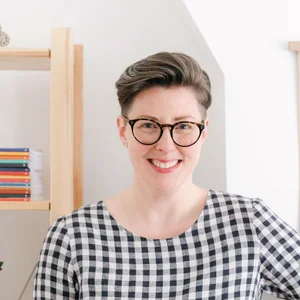
In this guest episode I’m joined by writer, mentor and designer Sarah Robertson to explore brand storytelling, starting again, and how our brands can evolve through different seasons of life. We also talk about her first book, Shape Your Brand Story, and nurturing a brand that feels like home.