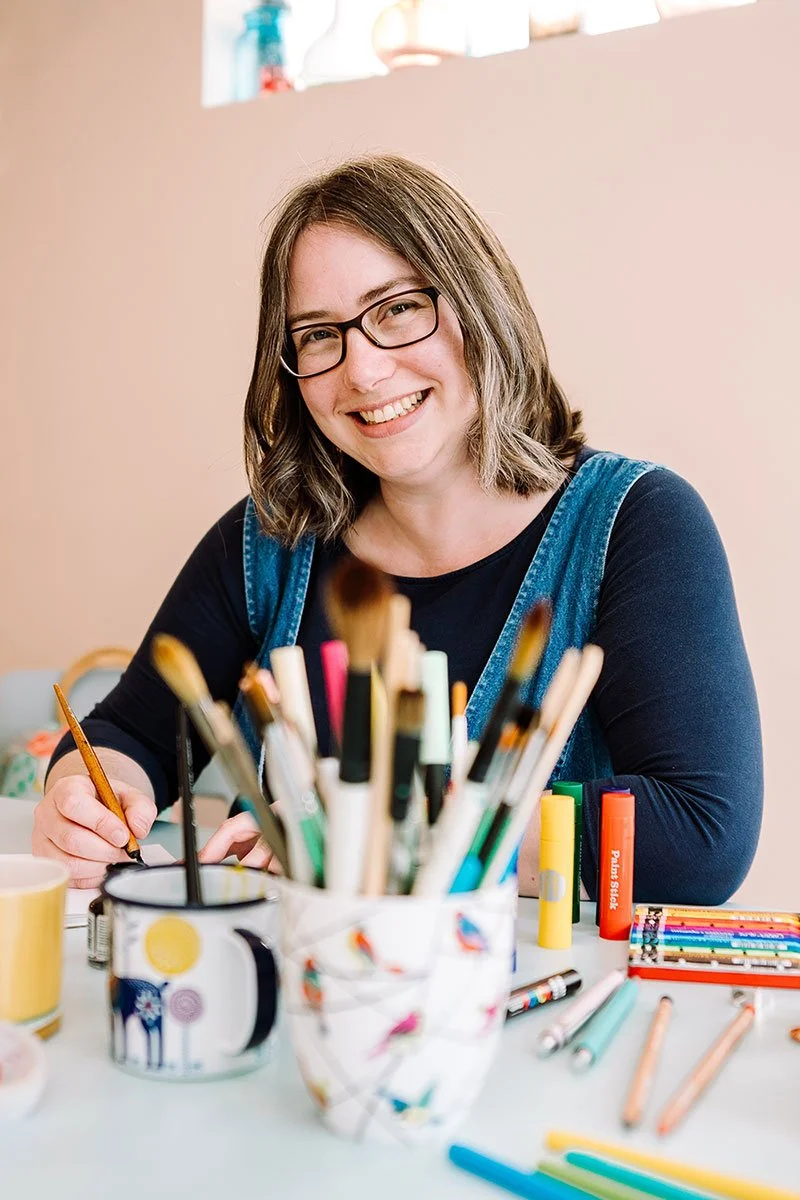
How slowing down can inspire creativity – with Rhiannon Adler
Creativity needs space to breathe, but it’s easy to lose touch with our ideas when we’re caught up in the pace and demands of running a business. In this guest post, Rhiannon Adler explores how slowing down can help us reconnect with our creative energy and find inspiration in quieter moments, and shares gentle ways to nurture your creativity and create space for ideas to flourish.
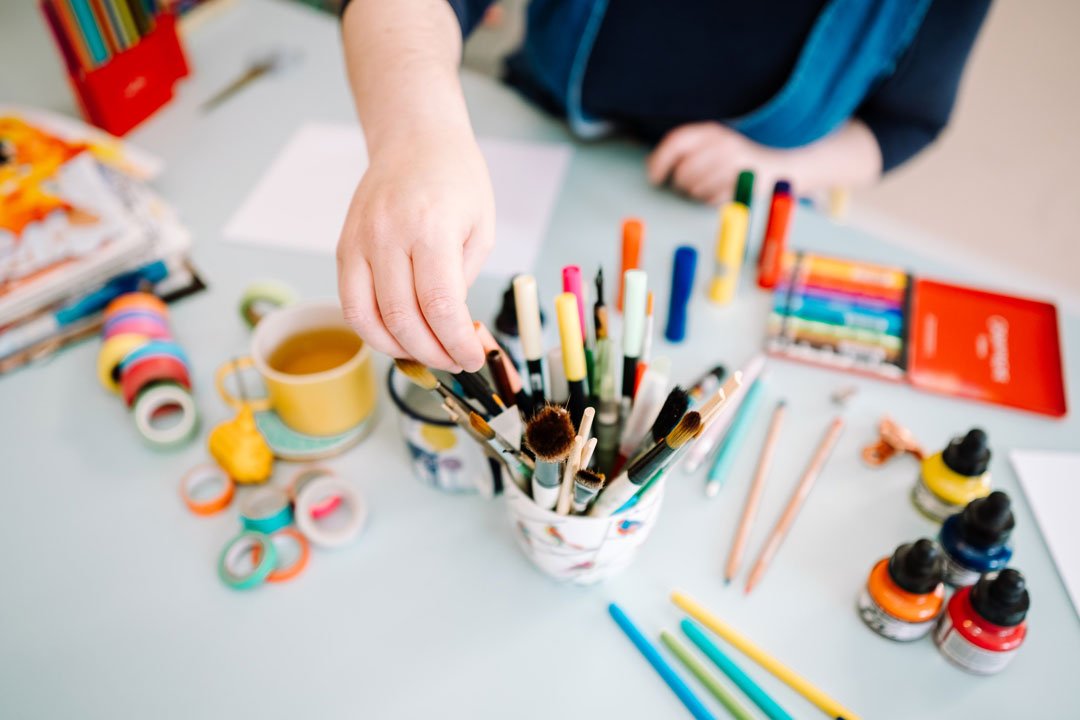
Creativity is often perceived as action. As something to do, an act to perform, and something to maintain or it will be lost. This is certainly what we get bombarded with on social media…
“Do this 30/60/100 day challenge”
“Join this course to boost your creativity”
“Practice, practice, practice”
Rarely is creativity talked about as a way of being, a way of existing, a way of living in the world. And yet that’s exactly what it is.
You are human, and to be human is to be inherently creative. You are creative in your existence every single day, whether you recognise it or not.
Every time you solve a problem, make a plan, have an idea, write a note, doodle, cook dinner or re-organise the cupboards for example, you are creative. Creativity is simply about bringing something into existence which was not there before, and you do this in a thousand ways every single day.
Just as Rick Rubin beautifully says in his book The Creative Act: “You are a creative being in a creative universe.”
We just don’t always see it that way.
Somewhere along the road of capitalist ideologies, creativity seems to have become confused with productivity and artistic talent. We think of creativity as great works of art, when in fact the creation of our lives is our own personal lifelong work of art.
You do not need artistic skill to be creative, and you do not have to be productive to be creative. In fact, sometimes, it’s the exact opposite.
Slowing down and choosing to not be productive can actually fire up your creativity. This might seem counter-intuitive, especially if you feel your creative energy is about doing / making / designing / building a thing… but bear with me.
Let me explain 3 reasons why taking the slow approach can in fact benefit your creativity in the long-term.
Slowing down allows your creative reserves to be refilled
Have you had a burst of creativity only to feel exhausted afterwards? Or perhaps you’ve devoted a lot of creative energy into your work (e.g. writing emails/blog posts) only to find you then lack the energy and enthusiasm to devote to your own creative projects?
This is because our creativity cannot run on a constant high, it’s like a battery that runs down over time and needs to be recharged. We might want to be creatively prolific all the time (and it often feels as though we should), but rest is a non-negotiable part of the creative process. It’s incredibly important - essential even - that we take time to reset and get re-inspired again. If we don’t, creativity may remain a struggle and could even lead to burnout. But if we do, our creative energy returns.
So next time your creativity is feeling drained, let yourself rest. Slow down, wind down, and fill up your inspiration cup. Read a magazine, watch telly, go to a gallery, sit in a cafe and read, go for a walk… ask what feels good to you right now, and let yourself do it!
There’s no right or wrong way to slow down, check-in with yourself and reflect. Only the right way that works for you.
Slowing down allows you to see yourself
When we are caught up in a doing or making mode, we often don’t see clearly what’s going on in ourselves or the world around us. Slowing down - even for a short time - can connect us more deeply to how we are feeling, and what we might need in any given moment.
Slowing down can help us notice how much energy we might have today, and recognise if there’s any tasks better suited to how we’re feeling.
Slowing down can help us notice what thoughts are bubbling around in our minds, and whether there’s any self-doubt or self-criticism getting in the way of our creativity.
Slowing down can stop us from simply pushing ourselves through whatever our bodies and minds are telling us that we truly need, and it can help prevent burnout.
There are so many ways to do this. You could for example journal, do a short meditation or relaxation, or simply take a few breaths and ask yourself: “how am I feeling and what do I need?”
The wellness industry, I think, has us feeling like there’s certain ways we should be slowing down, certain activities we must do, and do regularly. But there’s no right or wrong way to slow down, check-in with yourself and reflect. Only the right way that works for you.
Slowing down can help combat stress
Stress and anxiety kill creativity. There’s plenty of studies that confirm this. When we are stressed or anxious, our bodies go into “survival mode”, and direct resources away from a lot of our base functions - including creative thinking. Ever felt stressed or worried and struggled to make decisions, solve problems, or get creative in any way? Yep, that’s your body’s nervous system at play, basically overriding your ability to think creatively.
By consciously choosing to pause and take measures to slow your system down, you will find it easier to connect to your creativity.
We slow down to care for ourselves, to care for our wellbeing, and to care for our creativity.
Slowing down looks different for all of us as well, so I’m not here to give you a list of “how to” hacks. Personally, I get a lot of benefit from meditation, gentle walks in nature, and adjusting my workload/plans to accommodate how I’m feeling on any given day.
What does slow look like to you?
What helps you to release stress and reconnect to your creativity?
Try not to turn rest into yet another thing you need to “do” but take moments when and where you can. Small actions repeated often make a big difference.
Slowing down is so important - both for our creativity and our personal wellbeing - but it can be hard to do. We live in a world that idolises hustle and disregards rest, and so if you struggle to slow things down, don’t beat yourself up for it. Acknowledge the barriers you’re facing and go gently with yourself. Try not to turn rest into yet another thing you need to “do” but take moments when and where you can. Small actions repeated often make a big difference.
And if you want to prioritise rest and explore a slower way of connecting to your innate creativity, you can join my free 7 Days of Creative Calm mini-course. Every day for a week you’ll receive a mini creative wellbeing prompt in your inbox, and you’ll come away refreshed and more creatively inspired. All you need is yourself and 5 minutes a day to enjoy.
Rhiannon Adler supports kind-hearted businesses to build aligned websites and explore their innate creativity, finding more joyful ways to live, work and play. Her free mini-course 7 Days of Creative Calm helps you connect more deeply to yourself, the world around you and your innate creativity. Find out more about Rhiannon and what she offers on her website.